

The FSH Midstream Self-Test allows you to easily check the hormone FSH (follicle-stimulating hormone) in a urine sample. Higher FSH levels can be a sign of menopause or the transition period that precedes it, also known as perimenopause.
This test provides you with an initial indication of hormonal changes and can be a useful tool for understanding what is happening in your body. However, the result is not a complete diagnosis. Only a doctor can confirm what the result means and advise you on the next steps.
Always discuss your results with a doctor or pharmacist. The FSHMidstream self-testis a supportive tool for home use, but it does not replace medical advice or a consultation with your doctor.
Menopause is a natural biological process that marks the end of a woman's fertile years. It is officially defined as a period of 12 consecutive months without menstruation. The years leading up to menopause, also known as perimenopause, can be accompanied by significant hormonal fluctuations.
During this transition, the ovaries gradually produce less estrogen and progesterone. In response, the body releases more follicle-stimulating hormone (FSH) to stimulate the ovaries. A consistently high level of FSH in the blood or urine is an important indicator of perimenopause or menopause.
When does menopause usually begin?
Menopause most commonly occurs between the ages of 45 and 55, with the average age being 51. However, the timing can vary significantly for each woman. The perimenopause transition can begin several years before the final menstrual period, sometimes as early as the late 30s. A variety of factors, including genetics, lifestyle, and health conditions, can influence the timing of this transition.
The symptoms of perimenopause and menopause are caused by fluctuating hormone levels and can vary widely in severity and type:
Menopause is a natural phase of life, not a disease. However, the symptoms can have a significant impact on quality of life. Treatments and supportive measures are available to help manage the symptoms.
Lifestyle changes: Regular exercise, a balanced diet, stress management, and avoiding factors that can trigger hot flashes (such as spicy foods or alcohol) can help.
Hormone therapy: Hormone replacement therapy (HRT) can effectively relieve many symptoms in some women. This should be discussed with a doctor, who will weigh the benefits and risks based on individual health history.
Other medications: Non-hormonal prescription medications can also help relieve specific symptoms such as hot flashes or mood swings.
Determine the day on which testing should begin. (See the section above: “STARTING TESTING”).
Ensure the packaging is at room temperature before opening. Remove the test from the sealed packaging and use it within one hour.
Remove the cap from the test and hold the test so that the absorbent tip is held in the urine stream, or place the absorbent tip (≥ 2/3) in a clean cup containing the urine sample for at least 10-15 seconds.
Replace the cap, then place the test on a clean, stable surface with the test and control windows facing up, and start the timer immediately.
When the test begins to work, you may see a light-colored flow moving through the test and the result window. Read the result after 3 minutes. Do not interpret the result after 10 minutes.


A positive result means that the FSH level is higher than normal. Record the results and consult the table below to interpret the results.
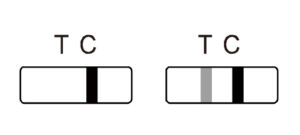
A negative result means that the FSH level is not elevated at this time. Record the results and consult the table below to interpret the results.
Insufficient sample volume or incorrect procedure techniques are the most likely causes for the control line failure. Check the procedure and repeat the test with a new test. If the problem persists, stop using the test kit immediately and contact your local distributor.
1st Test | 2nd Test | Interpretation |
Positive | Positive | Probably in perimenopause. Discuss methods and therapies with your doctor to promote good health after menopause. Do NOT stop using contraception immediately. |
Positive | Negative | May be in the early stages of perimenopause. Do NOT stop using contraception immediately. |
OR | ||
Negative | Positive | |
Negative | Negative | Probably no perimenopause this cycle. If symptoms persist, repeat the test next month or consider other possible causes for the symptoms. |
1st Test | Interpretation |
Positive | Menopause has most likely begun. The test can be repeated. Discuss methods and therapies with your doctor to promote good health after menopause. |